
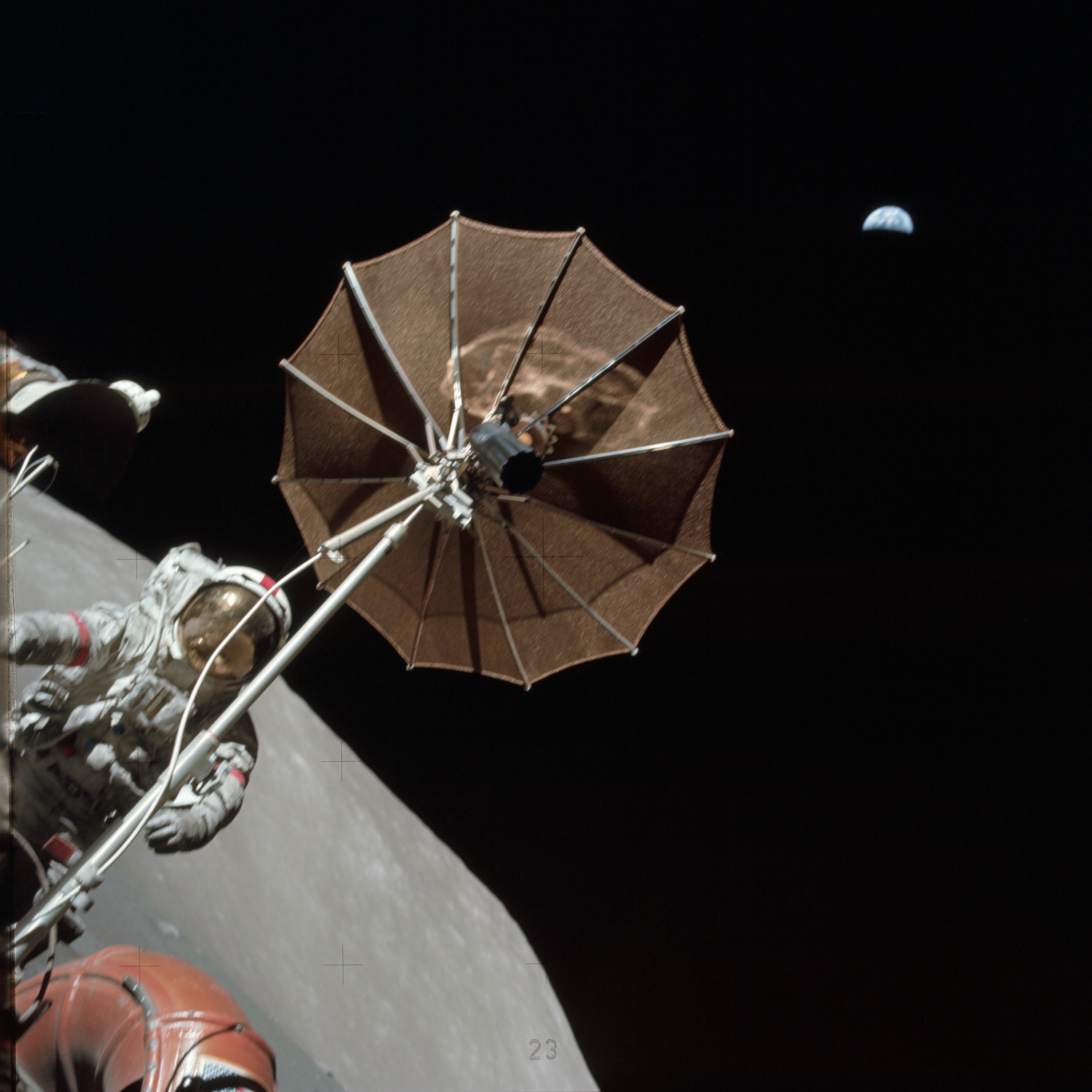
The international resolution backs work on how lunar missions can share radio frequencies without interfering with each other.
Thank you for reading this post, don’t forget to subscribe!
In NASA’s Apollo 17 photograph, Earth hangs above the rover’s antenna. For a crew with a clear view of Earth, a direct radio link is an option. A future rover in a place where Earth never rises above the horizon has a different problem: it needs to reach a relay first. Now add landers, instruments and other spacecraft that need radio links of their own.
On Nov. 26 in Doha, member states of the International Telecommunication Union adopted the first resolution from its highest decision-making conference devoted to lunar exploration. The decision backs technical work on how different missions can use radio frequencies without causing harmful interference. It does not assign new lunar frequencies or authorize a particular mission.
Why the Moon Needs More Than a Link to Earth
Radio signals carry more than voice or video. Missions use them to send commands and telemetry, work out where they are, and gather measurements. The ITU’s account of the decision calls for studying connections among systems on the lunar surface and in lunar orbit, and how those systems can share spectrum with services already using it.
NASA’s LunaNet work shows what one part of that problem looks like. Its standards describe how compatible systems could work together, including via relays for missions without a direct view of Earth. Standards that help equipment exchange information are not the same thing as international decisions about which frequencies different services can use.
What Happens Next
The ITU’s technical groups are studying how much spectrum lunar services need, whether they can share it with existing users, and what regulatory changes might be needed. That work is intended to inform the 2027 World Radiocommunication Conference. The ITU says ten countries have already submitted radio-frequency filings for projects on or around the Moon. Those filings show that administrations are planning for lunar radio use; they are not a count of operational missions.
Sources
- ITU: Nov. 26 Lunar Communications Decision
- ITU: What the Lunar Resolution Will Do
- NASA: Lunar Networking Standards
- NASA: Apollo 17 Archive Photograph



Leave a Reply