
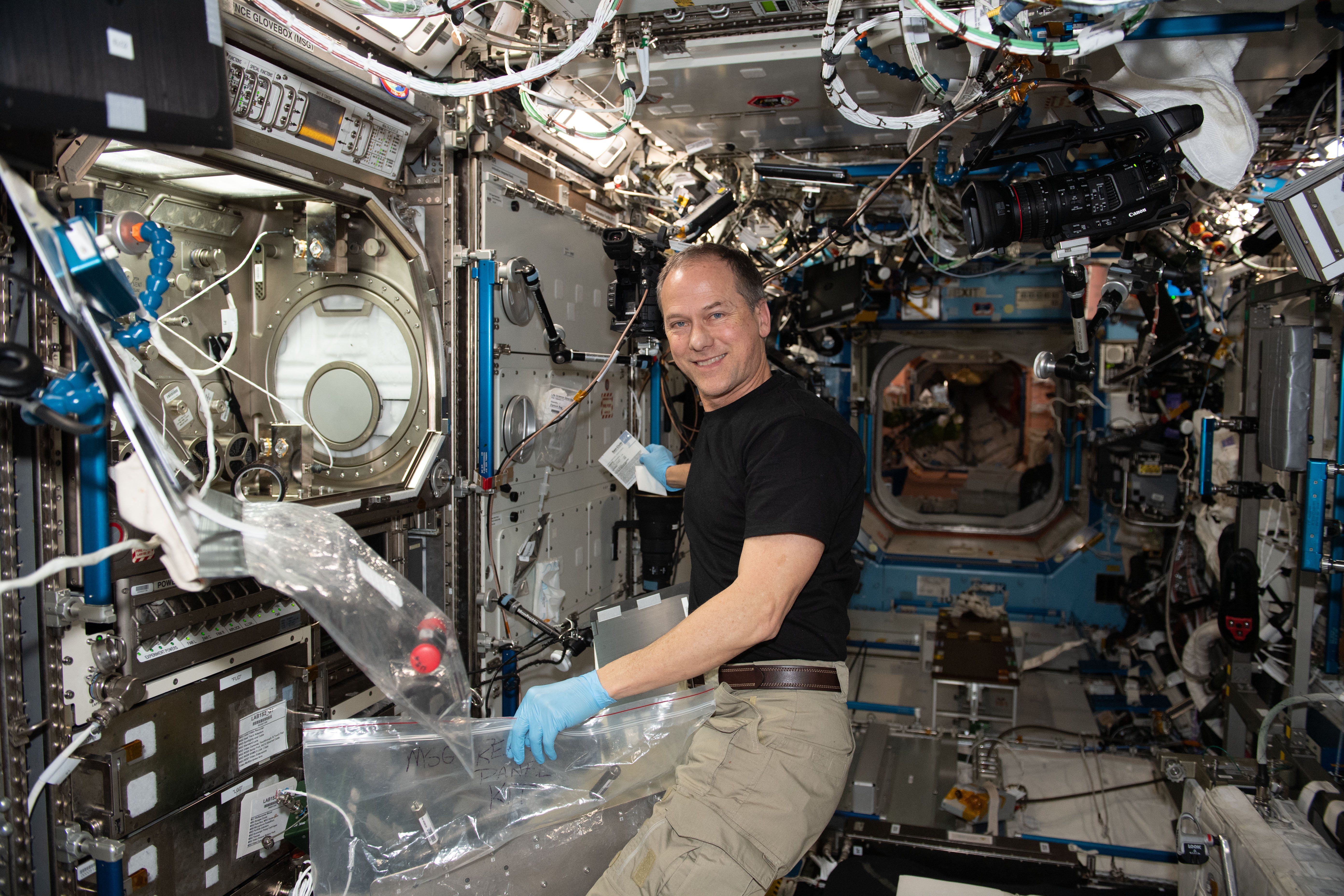
A Cygnus cargo flight is set to carry hardware that could keep lab-grown brain tissue supplied with nutrients during longer experiments.
Thank you for reading this post, don’t forget to subscribe!
The most important piece of a new experiment headed for the International Space Station does a surprisingly ordinary job: it feeds a lab sample. But if scientists want to study brain tissue on long missions, they first need to show that the equipment can keep the tissue alive and the experiment stable without someone tending it all the time.
In its Nov. 27 payload update, NASA described a miniature fluid-handling system that it plans to fly aboard Northrop Grumman’s CRS-25 cargo mission. The experiment, AVATAR-Org4, is led by Joel W. Blanchard of Mount Sinai. It follows earlier station work with tiny, three-dimensional tissue models called miBrains.
What a Tiny Brain Model Can Tell Us
A miBrain contains several types of human brain cells, but it isn’t a complete brain and can’t stand in for an entire astronaut. Researchers use models like these to study a narrower question: what happens to tissue under a set of conditions they can observe and compare? Having more than one type of cell in the model gives them a way to look at interactions they would miss if they grew just one cell type.
That experiment is only as good as the conditions in which the sample is kept. If the liquid feeding the tissue doesn’t stay stable, a change in the sample could reflect a problem with the equipment rather than a response to spaceflight.
Why NASA Is Testing the Hardware First
The AVATAR-Org4 investigation will test whether a miniature automated system can mix and deliver the nutrient liquid and maintain its quality over time. The aim is to find out whether the hardware can support longer studies with little crew intervention. The new flight is a validation step, not a report of changes in brain tissue and not a medical finding about astronauts.
That distinction matters. Before scientists can use the equipment to ask what a long mission might do to living tissue, they need a dependable way to support the sample. A successful test would give researchers a better basis for designing those experiments. It wouldn’t tell them how a crew member’s brain responds to a trip to Mars.
What Happens Next
In its Nov. 27 launch update, NASA said the station’s mission management team gave the go-ahead to continue preparations. Cygnus XL is targeting launch from Cape Canaveral on Sunday, Nov. 29, at 10:47 a.m. Eastern (8:47 a.m. Mountain). The team cited a 60 percent chance of favorable weather in its early forecast. That is a launch target, not a confirmed liftoff. For the experiment, the milestone to watch after delivery is how the fluid-handling system actually performs.
Sources
NASA: Nov. 27 NG-25 Payload Update
NASA: AVATAR-Org4 Investigation
NASA: CRS-25 Launch Preparation and Weather
NASA: Archival Tissue Research Photo
Leave a Reply