
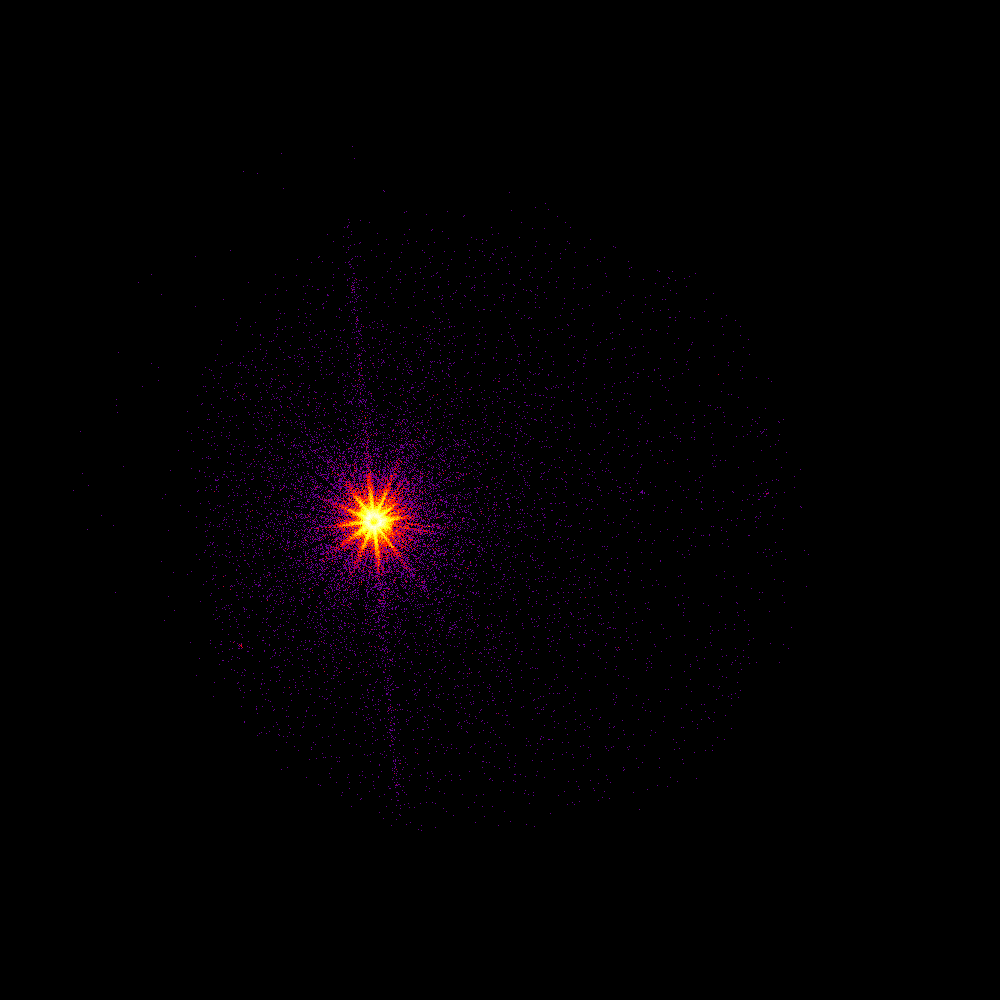
Two X-ray instruments gave researchers a broader look at the light around MAXI J1820+070, where earlier estimates of spin have disagreed.
Thank you for reading this post, don’t forget to subscribe!
A black hole can’t be seen directly, but the matter falling toward it shines brightly enough to tell a story. In a study published Nov. 27 in Astronomy & Astrophysics, researchers combined X-rays measured by NASA’s NICER and NuSTAR to take another look at MAXI J1820+070. Their model favors a rapidly spinning black hole and offers a possible source for some extra low-energy X-rays.
What the X-Rays Can Tell Us
MAXI J1820+070, discovered during an outburst in 2018, is a system in which a black hole draws in gas from a companion star. The gas forms a hot disk that gives off X-rays. Earlier work inferred different spins depending on which part of the spectrum researchers examined and which method they used. The authors’ open manuscript describes how they combined data from two instruments, fitting a broader range of X-ray energies during a disk-dominated phase of the outburst.
Their best-fitting models favor a dimensionless spin above 0.8 on a scale that reaches 1 at the theoretical maximum. That is a model-based estimate, not a direct measurement of how fast an object on the black hole’s surface would move. There is no solid surface to track.
Where the Extra Light Might Come From
The team also found that the disk model needed extra low-energy light to fit the observations. The added components appeared cooler and more spread out than the hottest inner disk. The authors suggest that warm material above the disk, farther from the black hole, could account for that light. This is one interpretation of the spectrum, not a photograph of those layers.
The broader fit is useful precisely because it lets researchers test whether a single picture can account for both the intense X-rays from the inner disk and the weaker light from farther away. It strengthens the case for fast spin under this model without making the older disagreement disappear.
Sources
Astronomy & Astrophysics: Published Study
Authors’ Open Manuscript
NASA: NICER and the Swift Image of MAXI J1820+070

Leave a Reply