
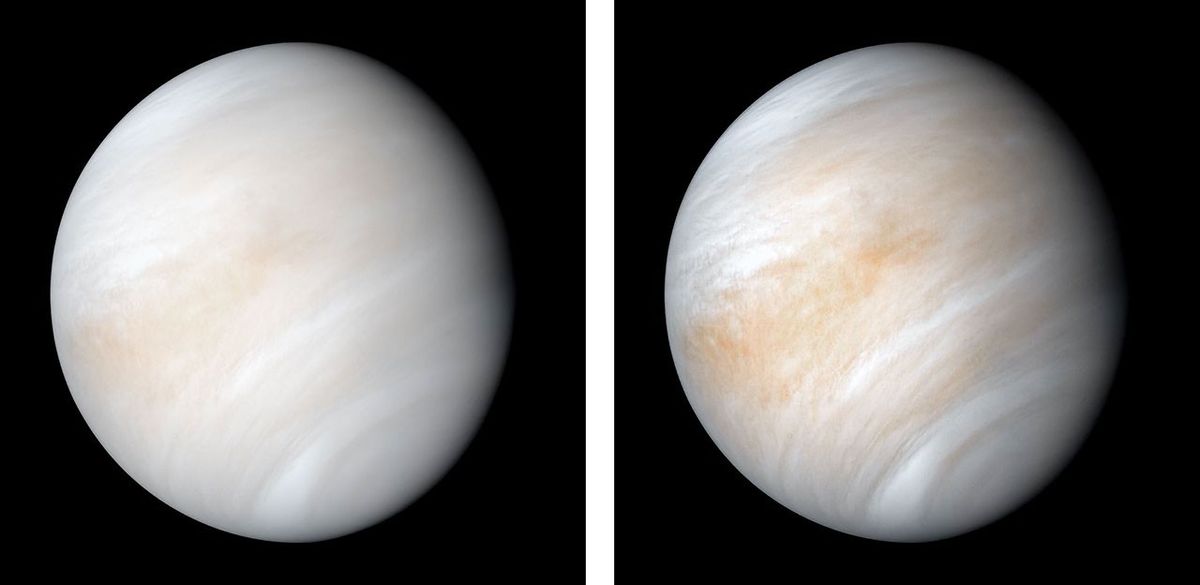
Look east before sunrise to catch Venus near peak brightness and learn why its crescent can outshine its fuller phases.
Thank you for reading this post, don’t forget to subscribe!
If you’re up before sunrise this weekend, try looking east for Venus. Just after its calculated Nov. 27 peak, the planet should still be easy to spot with the unaided eye in a clear sky. The Astronomical Society of Edinburgh’s November sky diary identifies it as a morning object and puts it at about magnitude −4.7 at peak.
When to Look
Start about an hour before local sunrise from somewhere with an open eastern horizon. The Philippines’ national astronomy service puts the peak at 2:37 a.m. Saturday in Philippine Standard Time, or 11:37 a.m. Friday, Nov. 27, in Mountain Standard Time. That converts the instant of peak brightness, not the best time to look. Saturday or Sunday before dawn is the practical window for Wyoming. If you use binoculars or a telescope, put them away before sunrise and never point them toward the Sun.
Why a Crescent Can Look So Bright
From Earth, Venus shows phases because it orbits inside our own orbit. NASA’s explanation of Venus’s phases shows the trade-off: when Venus is on the far side of the Sun from Earth, it can look nearly full through a telescope, but its disk is small. When it is closer, the apparent disk grows even as the lit fraction shrinks.
The light we receive depends on both effects. That is why a thin crescent can be brighter than the fuller but more distant disk. To the unaided eye, though, Venus still looks like a bright point. The spacecraft image above is an archival close-up, not a picture of this weekend’s crescent.
Sources
PAGASA Astronomical Diary
Astronomical Society of Edinburgh’s November Sky Diary
NASA’s Explanation of Venus’s Phases
NASA Photojournal, Mariner 10 Image
Leave a Reply